Market Outlook & Predictions
Why Sky‑Dweller Demand Is Rising Among Serious Collectors
The Rolex Sky-Dweller went from misunderstood to sought after. Its rare complication, steel versions and tight allocation explain why collectors want it.
Contents 6
The Rolex Sky-Dweller has gone from misunderstood to sought after. As collectors move past hype cycles, they want references with real mechanical substance, and within Rolex the Sky-Dweller is one of the most technically significant modern models.
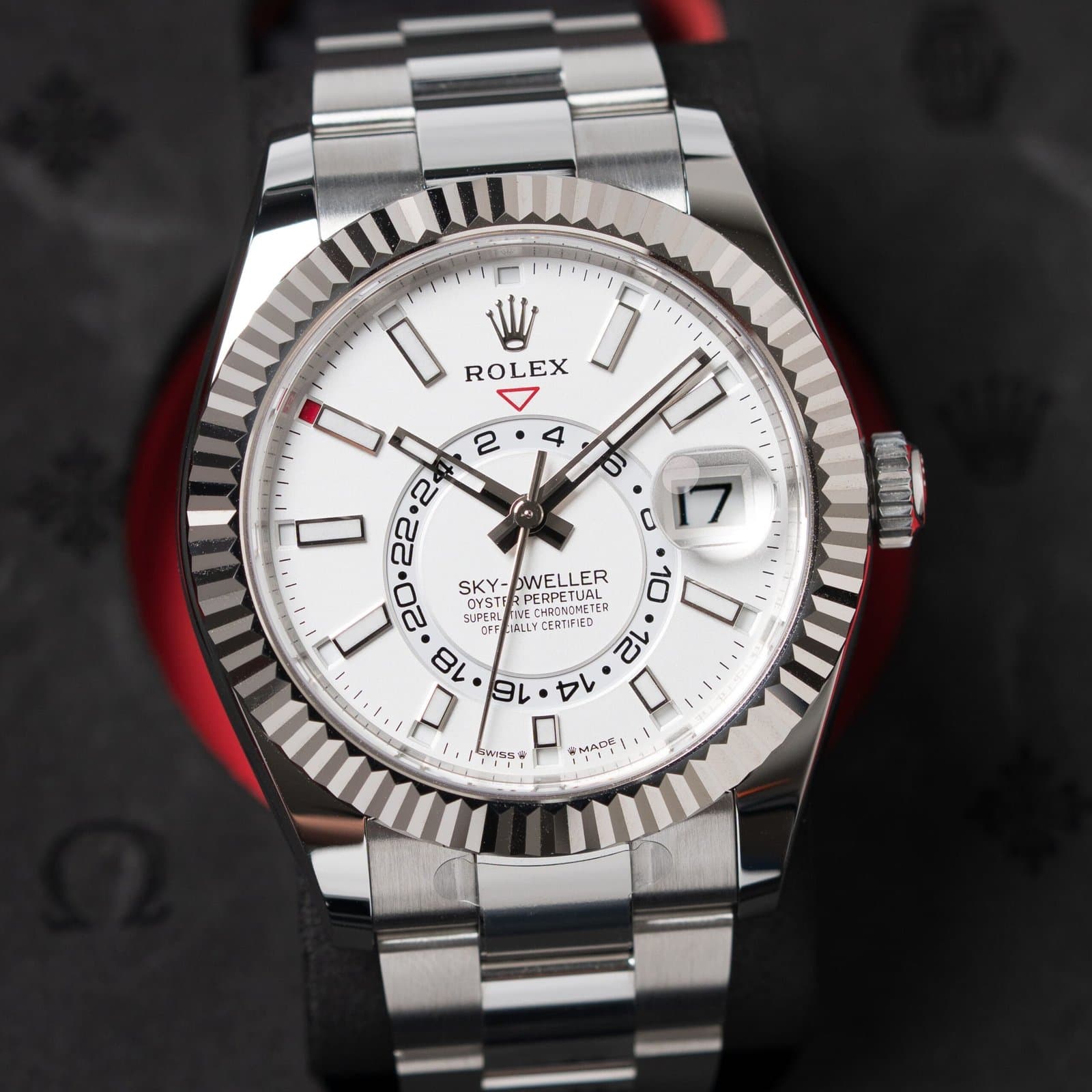
From sleeper to collector target
For much of its early run, the Sky-Dweller sat in an odd place: collectors respected the engineering, but demand trailed icons like the Daytona and GMT-Master II.
That has changed as experienced buyers favor references with substance over ones that run on story. We look at the wider shift, and why rare complications increasingly drive value, in our luxury watch market outlook.
A rare complication for Rolex
Rolex is known for durability and step-by-step improvement, not for complications. That’s why the Sky-Dweller stands out. It combines a second time zone with an annual calendar, set through the Ring Command bezel, so several functions stay easy to use without cluttering the dial. Hodinkee places it among the most technically ambitious watches Rolex has put into production.
Steel versions changed demand
The Sky-Dweller launched only in precious metals. The steel versions made it more wearable, more versatile and easier for more buyers to justify. In many markets, the steel configurations also became among the hardest to get from dealers, so availability tightened even as interest grew.
That matches the wider pattern: steel Rolex references usually sell more readily because they’re easy to wear every day, cost less to buy into and appeal to more buyers.
Allocation and secondary premiums
Authorized dealer allocation of the Sky-Dweller remains tight, especially for the steel versions. Many retailers receive fewer each year than they do of higher-volume lines like the Datejust. When allocation is thin, the secondary market takes the pressure, and premiums last as long as buyers compete for the same few configurations.
Sky-Dweller buyers also tend to be experienced collectors. That means less flipping and more long-term ownership, which helps steady prices when the market cools.
The outlook for 2026 and 2027
Rare complications, disciplined allocation and collectors who better understand modern Rolex engineering all support Sky-Dweller values. Steel references look set to stay the easiest to sell, while precious metal versions may see selective strength as collectors turn to overlooked models. The Sky-Dweller is becoming a core modern reference for collectors who want mechanical depth as well as the name.
Questions buyers ask
Is the Sky-Dweller a sports Rolex? No. Rolex positions it as a travel complication, though people often wear the steel versions like sports watches.
Which dial is most in demand? Steel configurations with the popular dials are the hardest to get from dealers and the most sought after.
Is it a good long-term hold? Its rare complication and controlled allocation tend to keep collectors holding on to it, though no price is guaranteed.