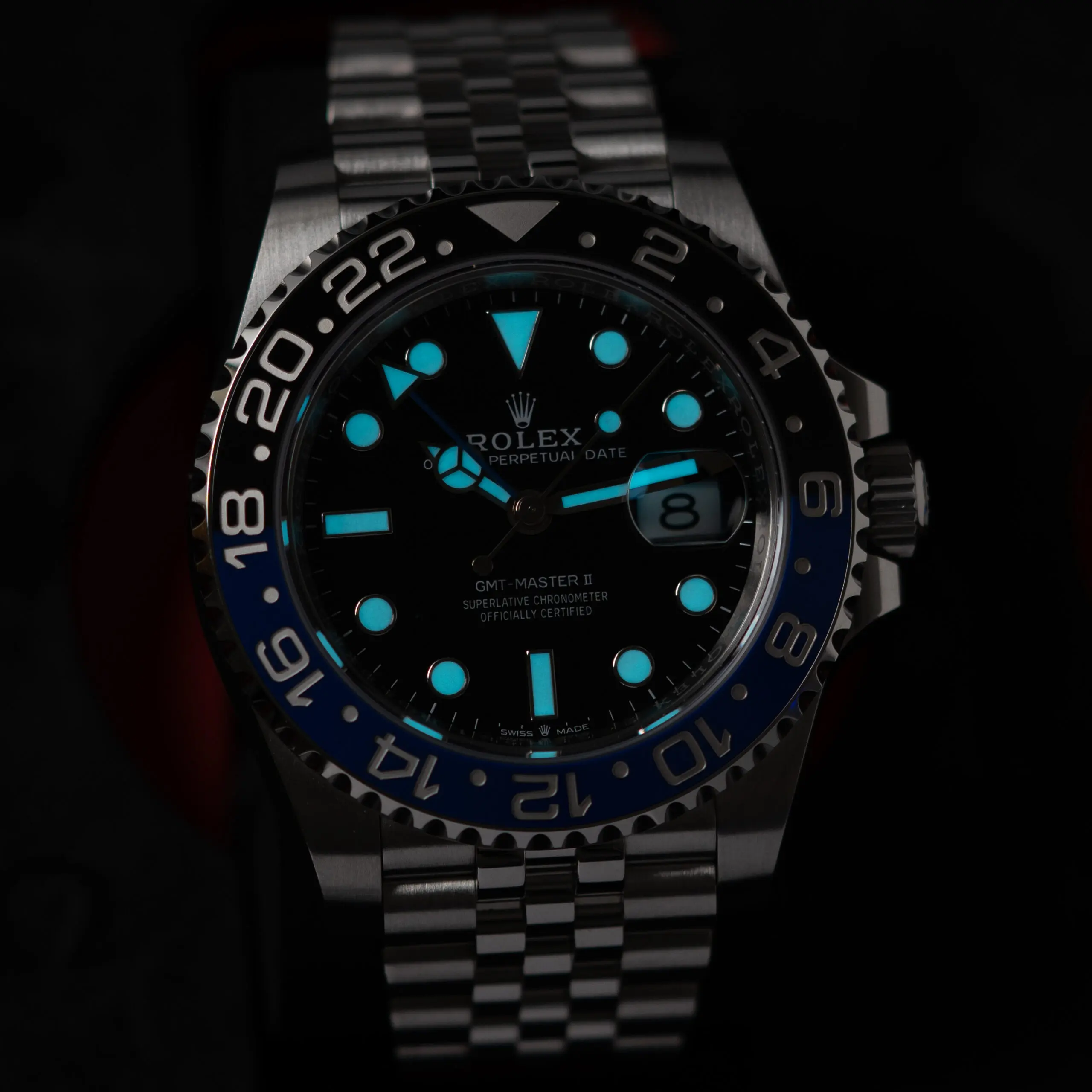
Ceramic vs Aluminum Rolex Bezels: Collector Demand Signals
Rolex bezel materials tell a deeper story than aesthetics alone. From vintage aluminum inserts to modern Cerachrom ceramic, bezel evolution reflects durability upgrades, production philosophy, and — most importantly — collector demand signals across different eras.
Aluminum bezels reflect Rolex’s early instrument heritage.
Ceramic signals durability and modern refinement.
Aging inserts can create scarcity premiums.
Vintage nostalgia vs modern perfection buyers.
Material Evolution: From Tool Watch Utility to Luxury Engineering
Early Rolex sports models — particularly GMT-Master and Submariner references — featured anodized aluminum bezel inserts designed for lightweight durability and field serviceability. At the time, these watches were professional tools rather than collector assets.
Aluminum inserts were intentionally replaceable, reflecting an era when functionality mattered more than long-term cosmetic preservation.
The transition to ceramic began in the mid-2000s as Rolex introduced its proprietary Cerachrom material. This marked a shift toward scratch resistance, UV stability, and long-term color permanence — aligning the brand more closely with modern luxury positioning.
Durability & Wear Signals: What Aging Tells the Market
Aluminum bezels age visibly. Fading, ghosting, and tonal shifts occur naturally through UV exposure and wear. What was once viewed as damage is now often interpreted as authenticity — a record of real-world use.
Coverage from Hodinkee highlights how bezel fading and dial aging have become drivers of vintage desirability rather than flaws.
Ceramic bezels, by contrast, resist aging almost entirely. Color stability, scratch resistance, and gloss retention appeal to modern buyers who prioritize longevity over visible history.
Collector Psychology: Patina vs Perfection
Collector segmentation often aligns with bezel material preference. Vintage enthusiasts gravitate toward aluminum for its storytelling capacity — each insert aging differently depending on environment and wear patterns.
Patina transforms a functional component into a unique visual signature, something ceramic materials rarely replicate.
Buyers studying vintage acquisition signals often analyze bezel originality and insert condition alongside case geometry. We break down these indicators in our vintage Rolex investment signals analysis, where bezel preservation plays a central role in long-term valuation.
Market Value Implications: Liquidity, Premiums, and Replacement Risk
Aluminum bezel value is heavily tied to originality. Watches retaining factory inserts — particularly rare colorways — can command meaningful premiums relative to those fitted with service replacements.
Replacement inserts, while functional, often reduce collector desirability because they remove era-specific aging signals.
Ceramic bezels, due to their durability, rarely require replacement. This stabilizes long-term ownership presentation but removes the rarity premium tied to aging variation.
- Original aluminum inserts drive vintage premiums
- Service replacements can suppress collector value
- Ceramic bezels preserve aesthetic consistency
- Patina variance creates uniqueness in aluminum references
Future Demand Outlook: Where Collector Signals Are Heading
Market trajectories suggest continued bifurcation. Neo-vintage aluminum references are gaining traction as supply tightens, particularly for unpolished watches with original inserts intact.
Demand divergence reflects two buyer psychologies: preservation-focused investors and durability-focused modern wearers.
Ceramic models continue to dominate primary market demand and modern secondary liquidity due to wear resistance and everyday practicality. As collector education deepens, bezel material has become a primary signal of era, positioning, and long-term desirability within the Rolex ecosystem.
Is aluminum or ceramic better for investment?
Aluminum often offers stronger upside due to vintage scarcity and patina premiums, while ceramic provides modern stability and liquidity.
Do ceramic bezels scratch?
Ceramic is highly scratch-resistant but not indestructible. Chips can occur under extreme impact, though they are uncommon.
Can aluminum bezel inserts be replaced?
Yes, but service replacement inserts may reduce collector value compared to original factory components.