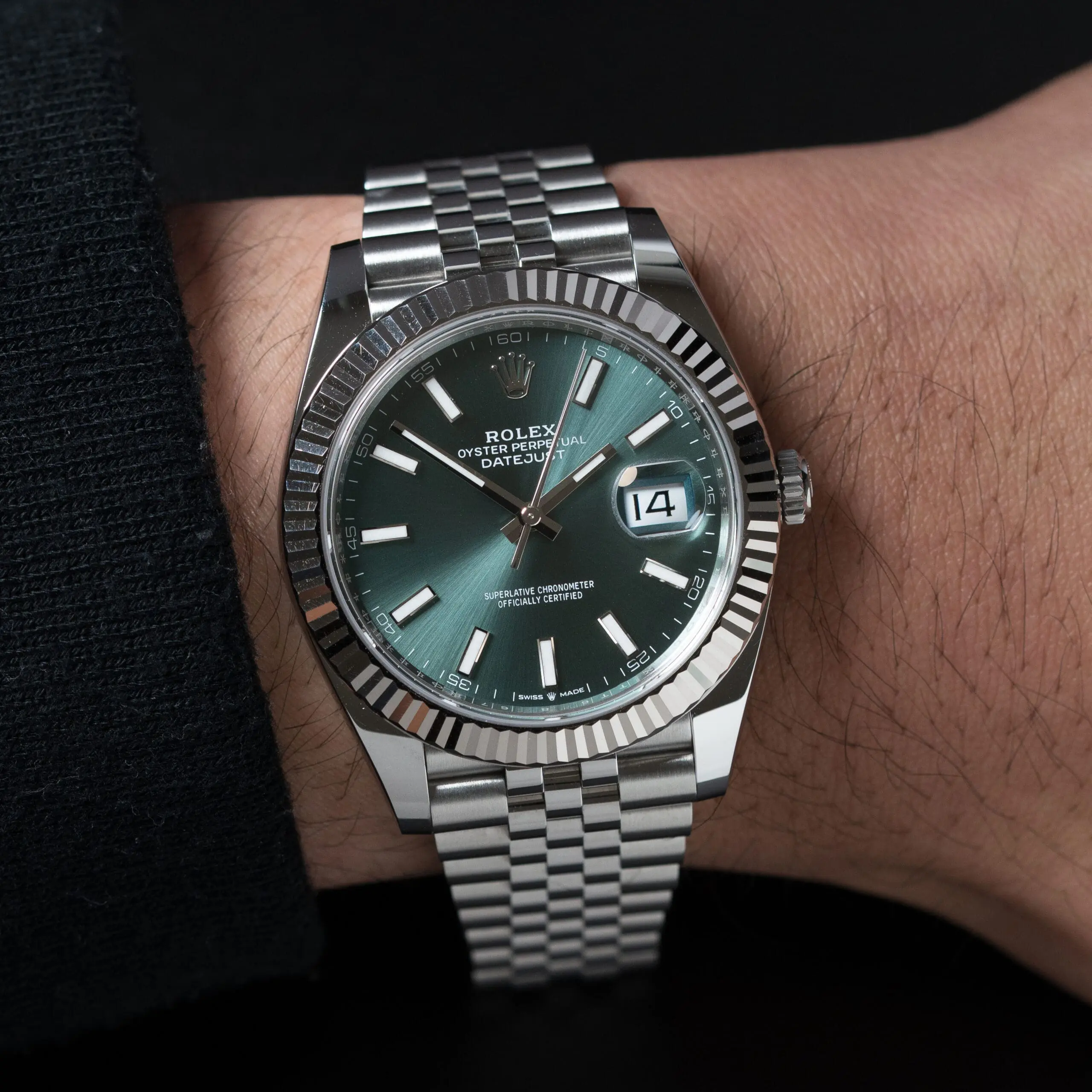
Rolex Discontinuations: How Collectors Spot Winners Early
Discontinued Rolex models can become tomorrow’s collector darlings — but only certain references evolve into long-term winners. Understanding the signals behind discontinuation cycles helps buyers position early, before secondary premiums fully form.
Replacement vs true exit changes outcomes.
Allocation shifts often precede announcements.
Broader buyer pools can accelerate premiums.
Premiums often mature after early volatility fades.
Why Rolex Discontinues Models
Rolex discontinuations rarely happen at random. Production shifts are typically tied to allocation strategy, case redesigns, material transitions, or evolving demand patterns across global markets. When a reference exits the catalog, it often reflects Rolex repositioning supply rather than reacting to short-term sales weakness.
In many cases, discontinuations align with refresh cycles, movement upgrades, or bracelet refinements that reposition entire collections.
Industry commentary from Hodinkee frequently discusses how catalog changes and supply behavior can shape collector narratives around exits and replacements.
Early Signals Collectors Watch
Seasoned buyers rarely wait for official announcements. Instead, they track soft supply signals: shrinking boutique allocations, longer waitlists, or sudden regional unavailability. These indicators can precede formal discontinuation news by months.
Collectors also watch SKU consolidation. When Rolex trims dial, bezel, or bracelet variants within a family, it can signal upcoming simplification — a move that sometimes precedes a full reference exit.
The goal isn’t to predict a headline. It’s to recognize when supply behavior is changing in a way that alters long-term scarcity expectations.
Steel vs Precious Metal Outcomes
Not all discontinued Rolex models appreciate equally. Stainless steel sports references often show the strongest post-exit liquidity because accessibility and daily-wear versatility expand the buyer pool.
Precious metal models can still outperform — particularly when production was already low — but appreciation curves often move slower and can be more condition-sensitive.
Collectors comparing historic exits can review examples and pattern signals in our discontinued Rolex pricing behavior breakdown, where timing, material, and buyer depth influence premium acceleration.
Timing the Secondary Market Reaction
Secondary market reactions tend to unfold in phases. Immediately after discontinuation, speculative buying can create short spikes. This is often followed by a stabilization period as inventory surfaces from dealers and private sellers monetizing the early hype.
True collector premiums typically form after the market absorbs supply and long-term holders tighten availability — often 12–36 months after production ends.
This delayed maturity window is why disciplined buyers avoid chasing the first surge. Entering during stabilization phases can improve long-term retention outcomes.
Strategic Acquisition Windows
The most strategic acquisition window often arrives after announcement volatility cools but before collector narratives fully mature. During this phase, pricing can reflect uncertainty rather than proven long-term scarcity.
Buyers targeting discontinued references typically prioritize full-set examples, minimal polish history, and desirable dial or bezel configurations — factors that compound collectibility once production is permanently closed.
Spotting winners early is less about predicting discontinuations and more about understanding which references have design durability, wearability, and production constraints that sustain demand years after exit.
Do all discontinued Rolex models increase in value?
No. Appreciation depends on demand depth, production volume, and collector appeal — not discontinuation alone.
How long after discontinuation do prices typically rise?
Many references see meaningful premiums develop over 1–3 years as supply tightens and collectors absorb inventory.
Are discontinued steel models better investments?
Often yes, because liquidity is broader and buyer demand tends to be deeper for steel sports references.