Rolex Explorer vs Submariner: Long-Term Value Comparison
Both the Explorer and Submariner sit at the core of Rolex’s professional lineup — but their long-term value behavior differs in ways serious buyers should understand. From liquidity to collector demand, each model follows a distinct appreciation pattern.
Submariner demand spans more segments than Explorer.
Explorer tends to be steadier; Sub moves in stronger cycles.
Submariner usually transacts faster with tighter spreads.
Explorer owners often hold longer and trade less frequently.
Heritage & Market Positioning
The Rolex Explorer was born from mountaineering heritage — a tool watch defined by simplicity, legibility, and understated design. Its identity is rooted in exploration and endurance rather than luxury signaling.
The Explorer’s appeal is often “quiet credibility”: fewer buyers chase it for hype, which can keep pricing behavior calmer.
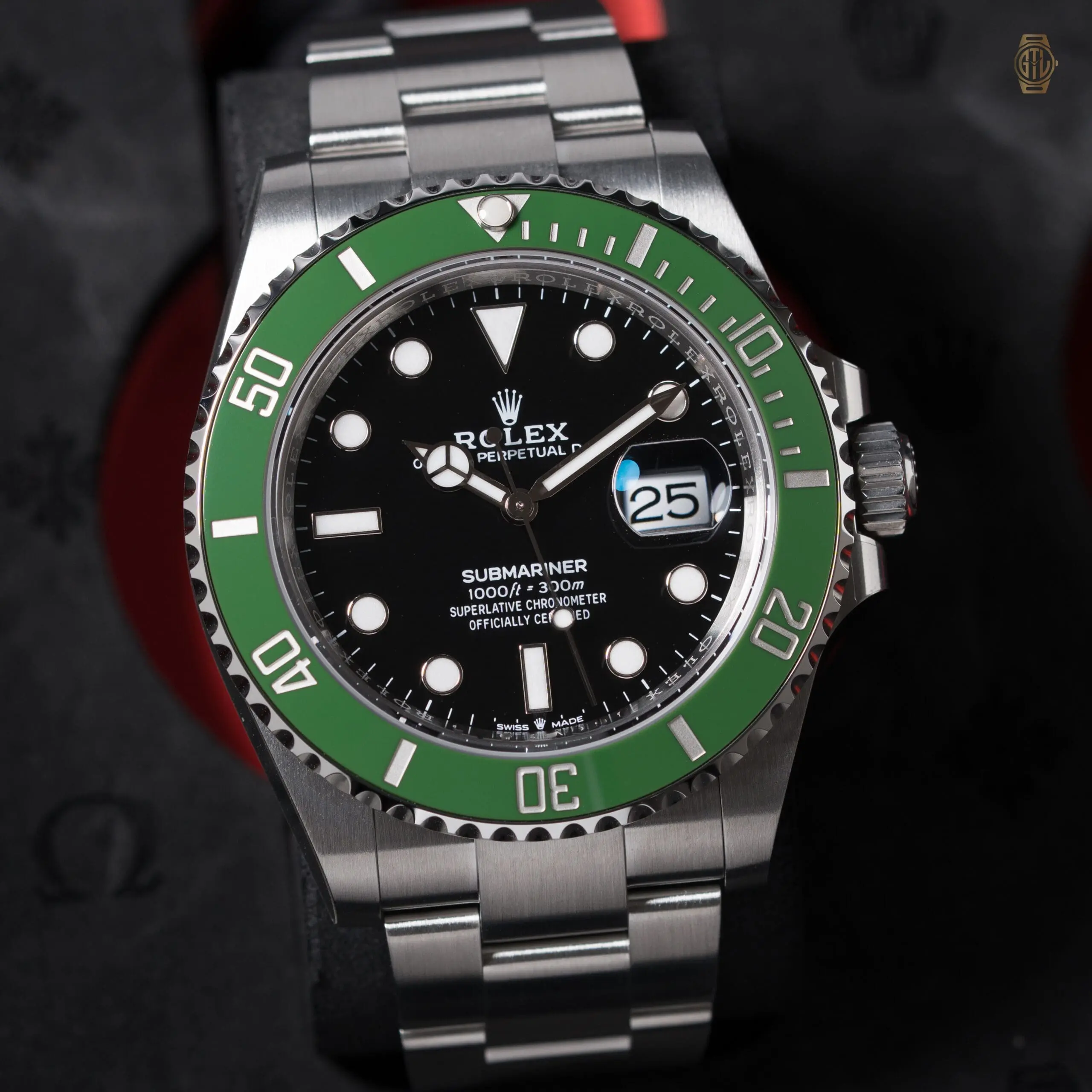
The Submariner, by contrast, evolved into one of the most recognizable luxury sports watches in the world. While originally built for diving, it now operates as both a tool watch and a status symbol — expanding its buyer pool far beyond purists and enthusiasts.
Secondary Market Liquidity
Liquidity plays a major role in price resilience. Submariners consistently trade at higher volumes across dealer networks, marketplaces, and private collectors — making them easier to sell quickly without heavy discounting.
Secondary market tracking discussed by Hodinkee frequently reinforces the Submariner as one of the most actively traded modern Rolex references.
Explorers, while respected, move at a slower pace. Their minimalist design appeals to a narrower buyer segment — which can reduce short-term liquidity during softer market cycles, even if long-term retention remains strong.
Price Stability vs Growth Potential
Historically, the Explorer demonstrates strong stability. It rarely experiences dramatic spikes — but it also tends to avoid sharp corrections. This makes it a lower-volatility hold for collectors who prioritize calm ownership.
Submariner pricing can be more cyclical, often responding faster to broad luxury demand and market sentiment.
Buyers comparing professional Rolex pricing behavior often look at adjacent references to understand how case size, production, and buyer pools influence resale curves. We break that out in our Submariner vs Sea-Dweller value comparison.
Collector Demand Signals
Collector psychology differs between these models. Explorers attract seasoned buyers who value heritage and subtlety — and those owners often hold longer and trade less frequently.
Longer hold times can reduce visible inventory, but it can also limit “headline” price spikes because turnover is slower.
Submariners benefit from layered demand: first-time buyers, seasoned collectors, and investors. That broader demand structure tends to create stronger price floors during downturns, and it can amplify recovery phases when confidence returns.
Which Model Holds Value Better?
From a pure liquidity and recognition standpoint, the Submariner holds the advantage. Its global demand, cultural visibility, and resale velocity make it one of the safest Rolex sports models for value retention.
The Explorer’s edge is stability: a lower entry point and a calmer depreciation curve for buyers who care more about long-term wear than cycle timing.
In practical terms, the trade-offs usually look like this:
- Best for liquidity: Submariner
- Best for stability: Explorer
- Higher growth ceiling: Submariner
- Lower volatility hold: Explorer
Is the Submariner a better investment than the Explorer?
In many cycles, the Submariner shows stronger appreciation and resale liquidity due to broader global demand.
Why do some collectors prefer the Explorer?
Its understated design, heritage roots, and lower hype profile appeal to enthusiasts seeking long-term wearability.
Which model is safer during market downturns?
Both hold value well, but Submariners often maintain stronger resale floors due to higher buyer volume and faster turnover.