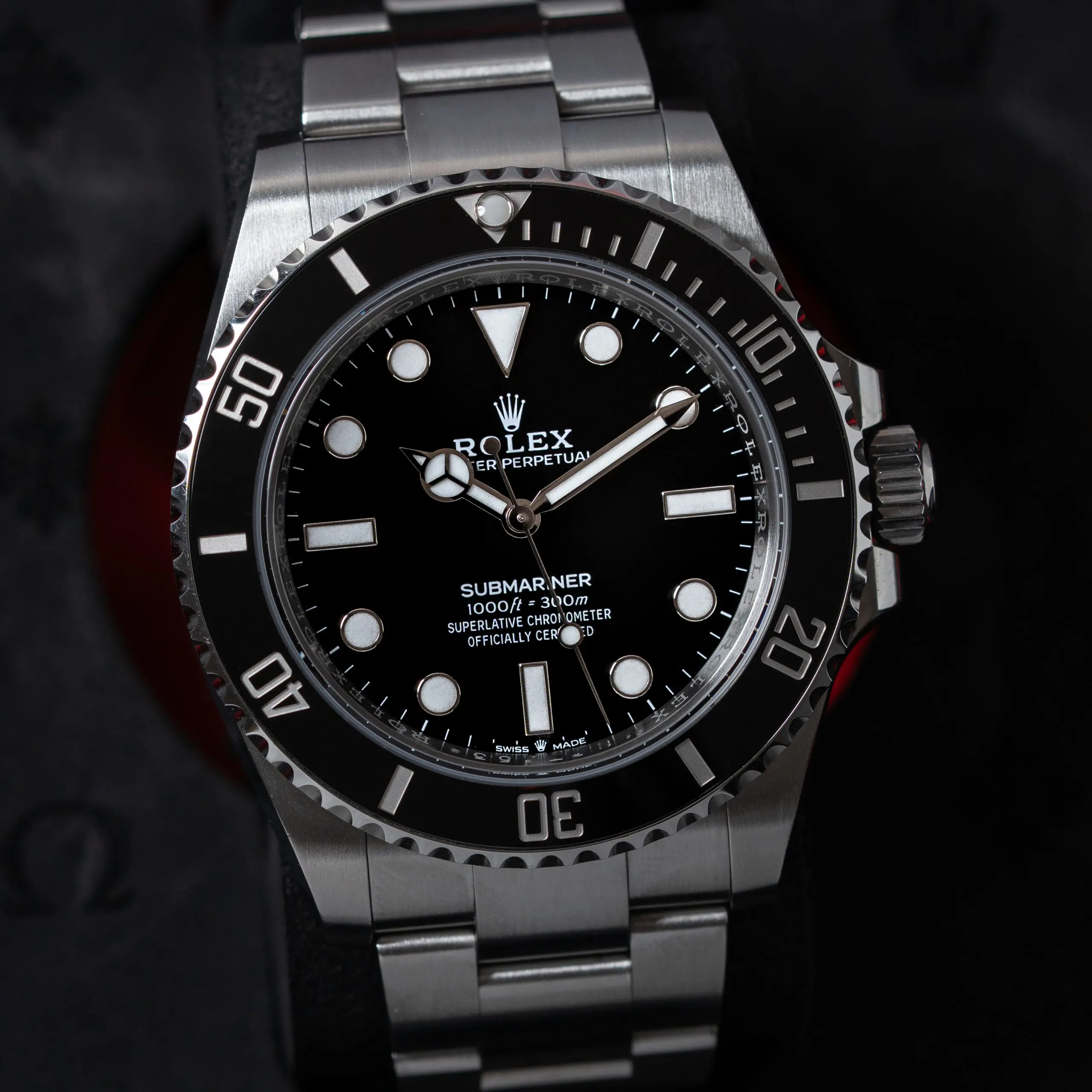
Rolex Scarcity Strategy: How Allocation Shapes Prices
Rolex scarcity isn’t accidental — it’s engineered. Allocation control, production pacing, and dealer distribution all shape secondary market pricing. Understanding how Rolex manages supply helps buyers anticipate premiums, retention strength, and future liquidity.
Allocation often matters more than raw production headlines.
Scarcity supports prestige and resale confidence.
Secondary prices react quickly to dealer supply pressure.
Dealer prioritization compounds manufacturer scarcity.
The Mechanics Behind Rolex Allocation
Rolex does not distribute watches evenly across its global authorized dealer network. Allocation is controlled by region, retail strategy, sales performance, and brand positioning. High-demand professional models — particularly steel sports references — are delivered in limited quantities relative to buyer demand.
Industry discussion from Hodinkee highlights how allocation constraints — not just production volume — can shape the perception of shortage among buyers.
This distribution model allows Rolex to keep demand pressure high without rapidly expanding manufacturing output. The result is an environment where availability feels constrained even when production is steady.
Why Scarcity Protects Brand Value
Scarcity is one of Rolex’s strongest brand protection mechanisms. By avoiding oversupply, the company supports resale strength, boutique prestige, and long-term collectability across core references.
Measured release pacing can stabilize pricing floors because buyers expect availability to remain structurally limited.
When supply is perceived as consistently constrained, buyers become less sensitive to short-term market dips. Scarcity creates psychological durability — reinforcing the idea that access itself is part of the value proposition.
Secondary Market Price Reactions
Allocation constraints directly influence secondary premiums. When dealers receive fewer units of high-demand references, grey market inventory tightens and prices typically lift — especially across GMT-Master II, Daytona, and Submariner families.
The secondary market often reacts faster than retail because pricing updates in real time based on inventory and inquiry flow.
We explored these ripple effects in our analysis on Rolex allocation shifts, where regional distribution changes began influencing liquidity and buyer access timelines.
Dealer Strategy vs Buyer Demand
Authorized dealers operate inside Rolex’s allocation framework but apply their own client prioritization. Purchase history, relationship depth, and long-term buying behavior can influence who gets access to scarce models.
This “two-layer” scarcity — manufacturer constraint plus dealer gatekeeping — is why many buyers experience the shortage as more intense than production numbers might suggest.
Buyers without boutique relationships are often pushed toward the secondary market, where pricing reflects access and timing rather than MSRP.
What Allocation Signals for Future Prices
Allocation patterns can act as forward-looking pricing indicators. When supply remains tight despite cooling macro demand, it signals Rolex is protecting long-term value rather than chasing short-term volume.
When supply visibly expands, premiums can compress as buyers regain access through retail channels.
Buyers tracking allocation trends often gain early insight into which models are approaching pricing inflection points — not from headlines, but from real dealer delivery behavior.
Does Rolex intentionally limit supply?
Rolex manages production and distribution carefully, prioritizing long-term brand equity over short-term volume expansion.
Why are some models harder to get than others?
Sports models and high-demand steel references tend to receive tighter allocations because buyer demand is concentrated.
Can allocation increases lower resale prices?
Yes. When supply rises and availability improves, secondary premiums often compress.