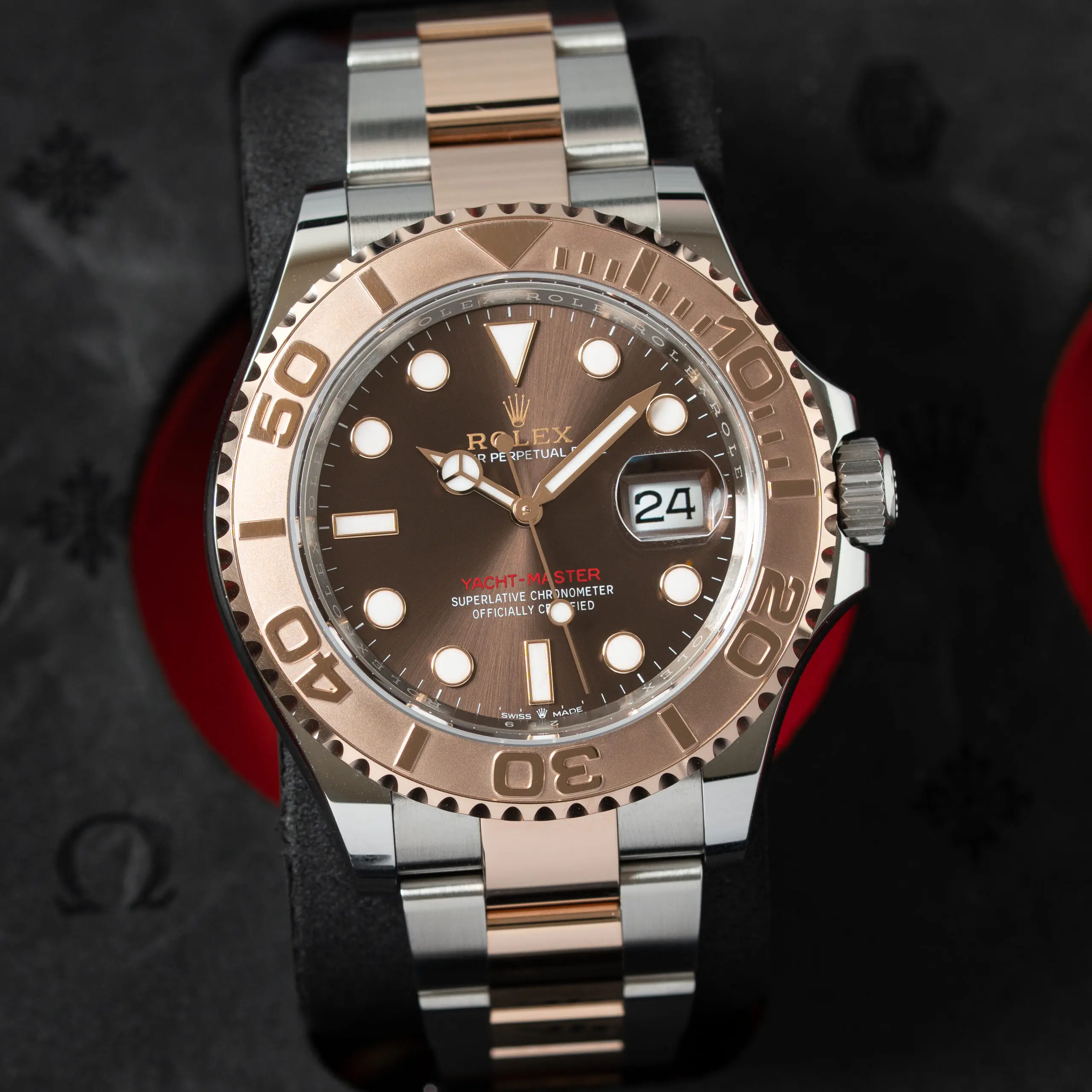
Rolex Yacht-Master Investment Outlook for 2026 Buyers
Often overshadowed by Submariner and GMT hype, the Rolex Yacht-Master sits in a unique market position — blending sport functionality with luxury finishing. As 2026 approaches, buyers are beginning to re-evaluate its long-term upside.
Market Position vs Other Rolex Sports Models
The Yacht-Master has always occupied a middle ground within Rolex’s sport lineup. It carries the case architecture of a professional tool watch but integrates more luxurious materials, finishing, and weight distribution.
Compared to Submariners or Sea-Dwellers, the Yacht-Master was never built around extreme depth ratings or pure utility. Instead, it leaned into lifestyle sport — sailing, leisure, and prestige positioning — which historically limited speculative demand but increased long-term brand stability.
Buyers evaluating Rolex sports models purely through an investment lens often prioritize steel tool watches first. However, shifting buyer preferences are beginning to rebalance attention toward hybrid sport-luxury references — especially as steel supply remains constrained.
Material Variants & Collector Demand
Yacht-Master investment performance varies heavily depending on material configuration. Stainless steel and platinum bezel models (Rolesium) historically lead liquidity due to their balanced price entry and iconic aesthetic.
Everose gold Oysterflex references, while visually striking, operate in a narrower buyer pool due to higher retail pricing and softer secondary liquidity. Two-tone configurations sit between those extremes.
Buyers comparing mixed-metal Rolex demand cycles should review our deeper breakdown of two-tone Rolex investment performance, where pricing resilience and buyer psychology differ significantly from full steel sports references.
Secondary Market Pricing Trends
Over the past market cycle, Yacht-Master references experienced milder volatility than hype-driven steel sports models. While Daytonas and GMTs saw aggressive peaks and corrections, Yacht-Master pricing moved more gradually.
Market analysts at Hodinkee have noted that Rolex sport-luxury hybrids tend to track collector sentiment more slowly, often lagging hype cycles but showing steadier long-term pricing floors.
This slower movement can actually benefit long-term holders. Reduced speculation leads to less artificial inflation — creating healthier retention curves over multi-year ownership windows.
Who the Yacht-Master Appeals To
Yacht-Master buyers typically differ from core tool-watch collectors. The reference attracts lifestyle luxury buyers — individuals who want Rolex sport DNA but with more visual presence and wrist weight.
This includes executives, boutique collectors, and second-watch buyers who already own a Submariner or GMT. For them, the Yacht-Master becomes a diversification piece rather than a primary acquisition.
That buyer segmentation limits speculative flipping but strengthens long-term ownership retention — a key signal for price floor durability.
Investment Outlook Heading Into 2026
Heading into 2026, the Yacht-Master sits in an interesting re-evaluation window. As steel sports premiums stabilize and buyers seek alternative Rolex exposure, hybrid references are gaining renewed attention.
Rolesium models in particular may benefit from this shift — offering iconic Rolex aesthetics with lower entry pricing than Submariners or GMT-Masters.
While not a short-term speculation vehicle, the Yacht-Master presents a compelling long-horizon hold — especially for buyers prioritizing wearability, brand equity, and moderate scarcity over hype-cycle volatility.
Frequently Asked Questions
Is the Rolex Yacht-Master a good investment watch?
It offers stable long-term value retention, though typically with slower appreciation than steel sports models.
Which Yacht-Master material holds value best?
Rolesium (steel and platinum bezel) models generally maintain the strongest resale liquidity.
Will Yacht-Master prices rise in 2026?
Gradual appreciation is more likely than sharp spikes, driven by broader Rolex market stabilization.