Comparisons
Steel vs Gold Rolex in 2026: Which Holds Value Better?
If you’re unsure whether to buy stainless steel or go precious metal, the “better value” answer usually comes down to one thing: how fast you may need to exit. Steel tends to trade like a liquid asset. Gold tends to trade like a conviction asset.
Quick takeaway: If resale speed matters, prioritize steel. If you’re buying to wear and keep, gold can be the better “value” even if the resale spread is wider.
Use-case check: Buying as a daily? Traveling often? Want “one watch”? Start with steel or two-tone before full gold.
In this guide:
Steel buyer profile
Wants maximum flexibility, minimal friction, and the broadest resale audience.
Gold buyer profile
Wants presence, weight, and “this is my watch” energy — and is okay holding longer.
2026 demand cycles: what’s actually moving
In 2026, “steel vs gold” isn’t just a material debate — it’s a demand-cycle debate. Steel sport Rolex still tends to move with broad buyer demand because it’s the default entry point for most collectors. When sentiment tightens, steel pieces often keep trading because they remain the most wearable and “least explainable” purchase.
One useful way to think about cycles: when confidence dips, buyers move toward familiar references with the deepest buyer pool; when confidence rises, buyers branch into precious metals, gem-set, or more niche configurations.
Gold models can outperform during periods where retail pricing climbs and buyers start valuing “what it is” over “what it flips for.” But they can also slow down quickly if the market turns risk-off, because fewer people wake up wanting a full-gold daily.
Wearability: what you’ll reach for (and what you won’t)
Wearability is the quiet king of long-term value. A watch you confidently wear becomes a “never sell” piece — and the best value is often the one you stop thinking about. Steel wins here for most people: it disappears with a hoodie, it works with a suit, and it doesn’t broadcast itself in every setting.
This lines up with broader secondary-market behavior highlighted in Chrono24’s reporting on what actually trades consistently on the market: Secondary Watch Market Report (H1 2025).
Gold can still be extremely wearable — but it’s context dependent. If your lifestyle is client dinners or travel lounges, gold feels unbeatable. If your lifestyle is casual and low-key, gold can turn into “special occasion only,” which quietly erodes its practical value.
Resale liquidity: speed, spread, and buyer pool
Liquidity is where steel typically dominates. More buyers can afford steel. More buyers want steel. More buyers will buy steel without thinking too hard. That matters because resale outcomes are shaped by how many ready buyers exist at your target price.
Think in three levers: buyer pool size, time-to-sell, and the discount required to close quickly.
Gold generally has a smaller buyer pool and wider spreads. You can still sell it — often for strong money — but patience matters more, and condition and completeness matter a lot more.
Value retention reality: what “holds value” really means
Most people use “holds value” to mean “I won’t lose money.” In reality, it can mean holding near retail, holding near your buy-in, or simply staying resilient when the market softens.
Steel tends to excel at flexibility. Gold tends to excel at emotional and experiential value.
The market prices desirability, scarcity, and wearability far more than raw material value. That’s why some steel references remain easier to move — even without precious metal content.
Which to buy in 2026: decision framework
If you want the simplest rule: buy steel when flexibility matters, buy gold when identity matters. Most regret comes from buying a watch that doesn’t match your life.
- If you might sell within 12–24 months: lean steel.
- If it’s a daily watch: steel first, two-tone second.
- If you already own steel: gold can be the meaningful upgrade.
- If resale speed matters: avoid full gold as your only piece.
- If this is a milestone watch: buy what you’ll actually wear.
FAQ
Does a gold Rolex always hold value better?
No. Gold can hold value very well, but steel often wins on resale speed and buyer demand.
Is steel always safer in uncertain markets?
Usually yes, because it has a broader buyer pool and tighter spreads.
What’s the best compromise between steel and gold?
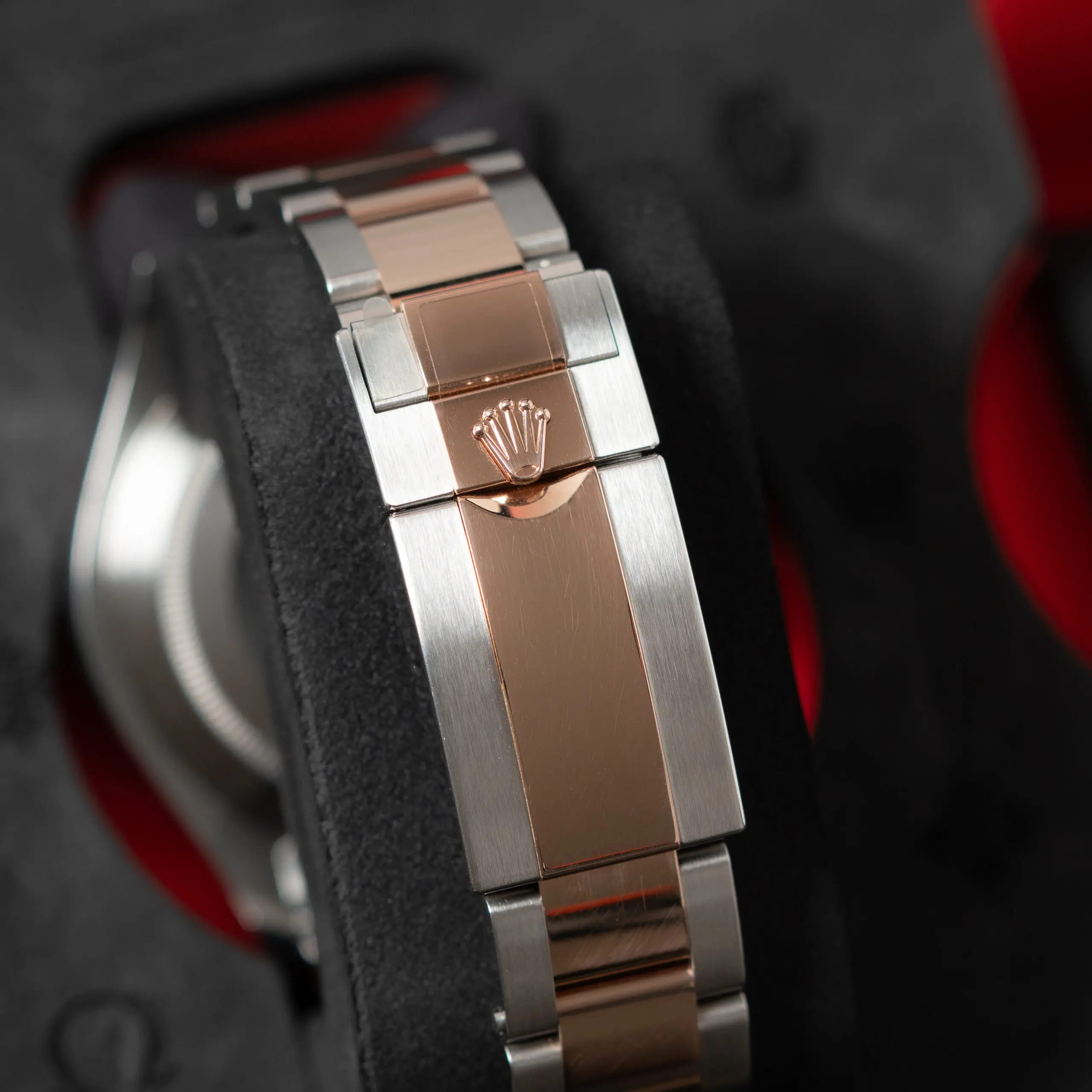
Two-tone often offers presence without sacrificing too much liquidity.
Still exploring?
Return to the homepage to read more guides and market breakdowns.
Ready to browse?
View available watches in the shop and see what’s moving right now.