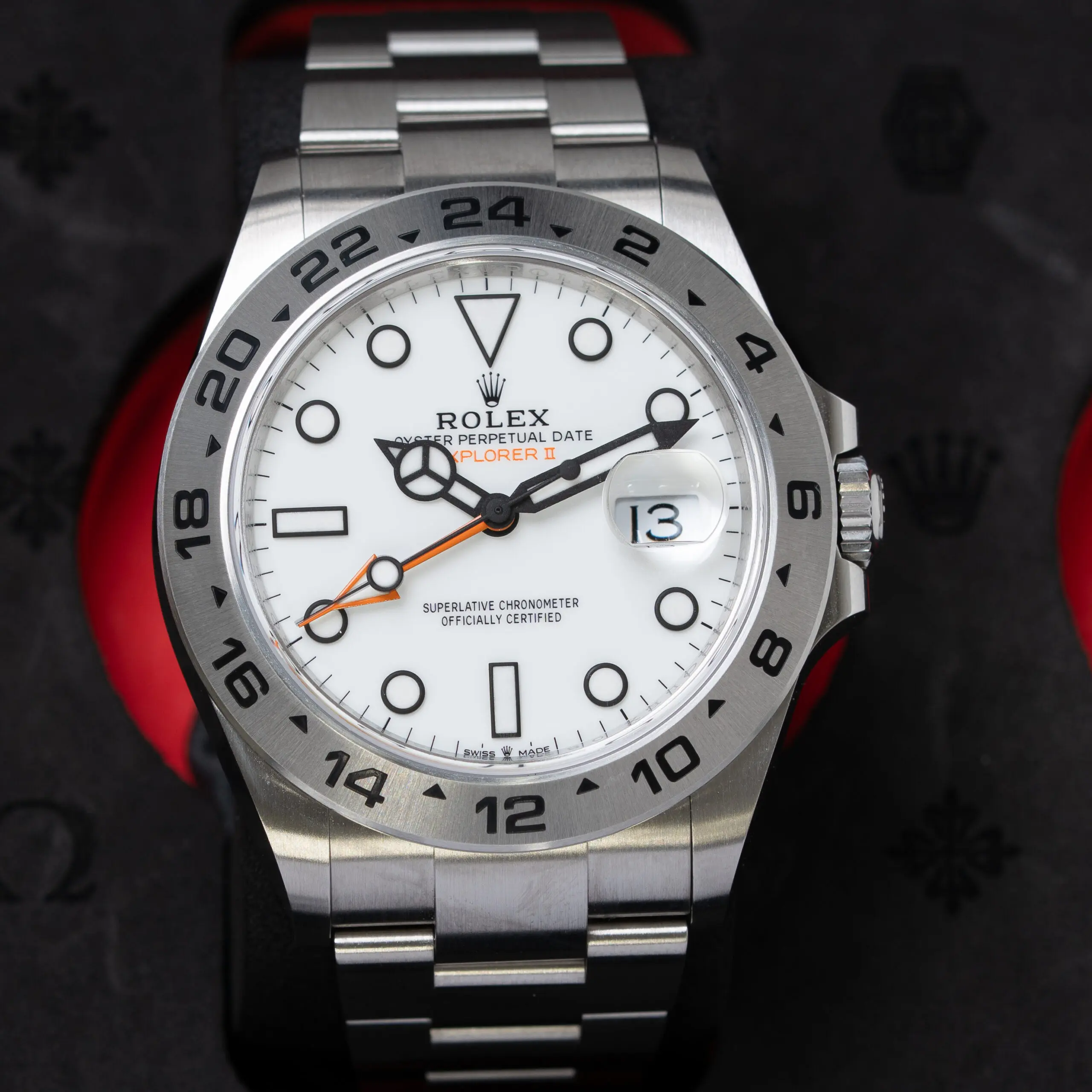
What Drives Rolex Grey Market Pricing Premiums?
Rolex grey market pricing can confuse first-time buyers and seasoned collectors alike. Why do some models trade thousands above retail while others sit closer to MSRP? Understanding what actually drives secondary market premiums helps buyers make more confident acquisition decisions.
Retail routing creates scarcity even when production is steady.
Cultural relevance concentrates premiums into a few references.
Faster resale velocity tends to support higher floors.
Premiums expand and compress with macro sentiment.
Supply vs Authorized Dealer Allocation
The single biggest driver of Rolex grey market premiums is the imbalance between demand and authorized dealer allocation. Rolex controls distribution tightly, and high-demand references arrive in limited quantities relative to buyer volume. That shortage creates waitlists that can stretch for years on core steel sports models.
Reporting from Bloomberg has discussed how constrained availability can support elevated secondary pricing.
When buyers can’t secure a watch through retail channels, they shift to the secondary market — where availability replaces waiting. That immediacy is what buyers are paying for, particularly on references like Daytona, GMT-Master II, and Submariner.
Model Demand and Cultural Popularity
Not all Rolex models command the same premium. Cultural popularity plays a major role: certain references become “default choices” for buyers because they’re globally recognized, easy to wear, and widely discussed in collector circles.
Stainless steel sports models often sit at the center of this demand because they balance luxury signaling with daily wearability, expanding buyer pools beyond traditional collectors.
Buyers tracking long-term demand behavior often use structured forecasts to understand which models concentrate premium pressure. Our Rolex price forecast for 2026–27 breaks down how model-specific demand concentration influences secondary pricing.
Production Constraints and Materials
Rolex manufacturing is deliberately conservative. The brand prioritizes quality control and vertical integration over rapid scaling, which limits how quickly output can respond to surging demand.
Material complexity can also affect throughput. Ceramic bezels, proprietary alloys, and precious metal cases require specialized processes that can slow manufacturing cadence.
As a result, even when Rolex increases production, supply rarely catches demand fast enough to eliminate premiums on the highest-pressure references.
Market Liquidity and Investor Behavior
The Rolex secondary market is no longer purely collector-driven. It now includes investors and asset diversifiers who focus on resale velocity, spread behavior, and downside risk — dynamics that can amplify premiums on the most liquid models.
When a reference can be sold quickly with limited discounting, it attracts more demand — which can tighten available supply even further.
Three forces tend to show up repeatedly in premium models:
- High resale turnover supports higher price floors
- Speculative holding reduces near-term available inventory
- Cross-border buyers globalize demand pressure
Timing the Grey Market Entry Point
Premiums are not static. They expand and compress with macro sentiment, currency dynamics, and luxury spending cycles — especially when buyer confidence rises or falls.
Softer periods can create acquisition windows for patient buyers, while bullish markets often widen premiums as discretionary spending accelerates.
A disciplined timing framework usually includes:
- Monitor macro luxury demand trends
- Track inventory depth and spread behavior across dealers
- Watch for retail price increases that reset secondary baselines
- Evaluate model-specific hype cycles before committing
Strategic entry timing can materially impact long-term retention — especially for buyers balancing passion purchases with disciplined pricing.
Why are Rolex grey market prices higher than retail?
Limited availability through the authorized channel pushes buyers into the secondary market, where immediate access can command a premium.
Do all Rolex models carry grey market premiums?
No. Premiums are typically strongest on high-demand steel sports models, while many two-tone and dress references trade closer to retail.
Will grey market premiums decline in the future?
Premiums fluctuate with market cycles, but sustained brand demand and controlled distribution have historically supported elevated secondary pricing on core references.