Buying Guides
How to Set an Automatic Watch When Daylight Saving Time Ends
Clocks fall back on November 1, 2026. How to set an automatic watch back one hour without hurting the date, and why a GMT makes the change easy.
Contents 7
- When does daylight saving time end in 2026?
- Can you turn the hands backward on an automatic watch?
- What is the 9 p.m. to 3 a.m. “danger zone” for the date?
- What if your watch stopped over the weekend?
- Which watches make the time change easiest?
- What should you check on a pre-owned watch’s crown and date?
- Questions buyers ask
To set an automatic watch when daylight saving time ends, wait until daytime on Sunday, November 1, 2026, pull the crown to the time-setting position and turn the hands back one hour. In Naperville and the rest of the Chicago area, clocks fall back at 2:00 a.m. Setting it mid-morning keeps the date mechanism out of the way.
That is the whole job for most watches. The details below cover why the time of day matters, what to do with a watch that has stopped in a drawer, and why a GMT with a jumping hour hand makes it a one-step change.
When does daylight saving time end in 2026?
On Sunday, November 1, 2026, at 2:00 a.m. local time. NIST, the federal agency that keeps official US time, says daylight saving time “ends at 2:00 a.m. on the first Sunday of November,” and lists this year’s period as March 8 to November 1.
Illinois observes it, so Naperville and Chicago drop from Central Daylight Time to Central Standard Time that night. If you live in Arizona or Hawaii, NIST notes that neither observes daylight saving time (the Navajo reservation in Arizona does), so there is nothing to change. The same goes for Puerto Rico, Guam, American Samoa and the Virgin Islands.
Your phone changes by itself. A mechanical watch keeps running on the old time until you set it.
Can you turn the hands backward on an automatic watch?
Yes, for a one-hour correction, as long as you do it at the right time of day. Seiko’s instructions for its 4R34 automatic movement say plainly: “Even when the time is set back across a day, the date will not be set back.” In other words, turning the hands backward through midnight won’t roll the date back. That’s why the hour you choose matters more than the direction you turn.
So don’t set the watch at 2:00 a.m. when the clocks change. Set it on Sunday morning or afternoon. At 10:00 a.m., the watch reads 11:00. Pull the crown out to the time-setting position, turn the hands back to 10:00, push the crown back in, and screw it down if your watch has a screw-down crown. The hands never pass midnight, so the date doesn’t move.
Crown positions differ between brands and calibers, and on a date watch one of them sets the date instead of the time. Check the manual for your exact model before you pull the crown.
What is the 9 p.m. to 3 a.m. “danger zone” for the date?
It is the window when the date change is underway inside the movement. Seiko’s 4R34 instructions say “Do not set the date between 9:00 p.m. and 3:00 a.m.,” and warn that doing so can stop the date from changing the next day. The same page says that when you set the time with the crown, “the date changes between 9:00 PM and 3:00 AM of the next day.”
That is Seiko’s wording for one of its own movements. Other makers’ manuals vary, so read yours. The safe habit works on almost any watch: do all your setting in daylight hours, and never quick-set the date late at night.
The clock change happens at 2:00 a.m., right inside that window. That is the main reason to wait until morning.
What if your watch stopped over the weekend?
Then you set the date and the time anyway, and the order matters. Seiko’s page says to move the time back before 9:00 p.m. or forward past 3:00 a.m. first, and only then confirm the date. Once the hands are clear of the window, you can set the date with the crown and then bring the hands to the correct time.
Check AM and PM as you go. Seiko’s page notes that the date normally changes around midnight, not noon, so if you turn the hands forward and the date jumps, you have just passed midnight. Keep turning until the hands reach the right time of day.
Power reserve decides how often this happens. GTL’s listing for a 2021 GMT-Master II Pepsi, reference 126710BLRO, gives its Caliber 3285 about 70 hours of power reserve. That’s enough to sit out a Saturday and Sunday off the wrist and still be running on Monday. A watch with a shorter reserve may need a full reset after a weekend in the drawer.
Which watches make the time change easiest?
A GMT with an independently set hour hand. On the Rolex GMT-Master II, La Cote des Montres describes “a movement allowing the hour hand to be set independently of the other hands,” and adds that “the date is synchronized with the local time.” The same article names the calibre as the 3285.
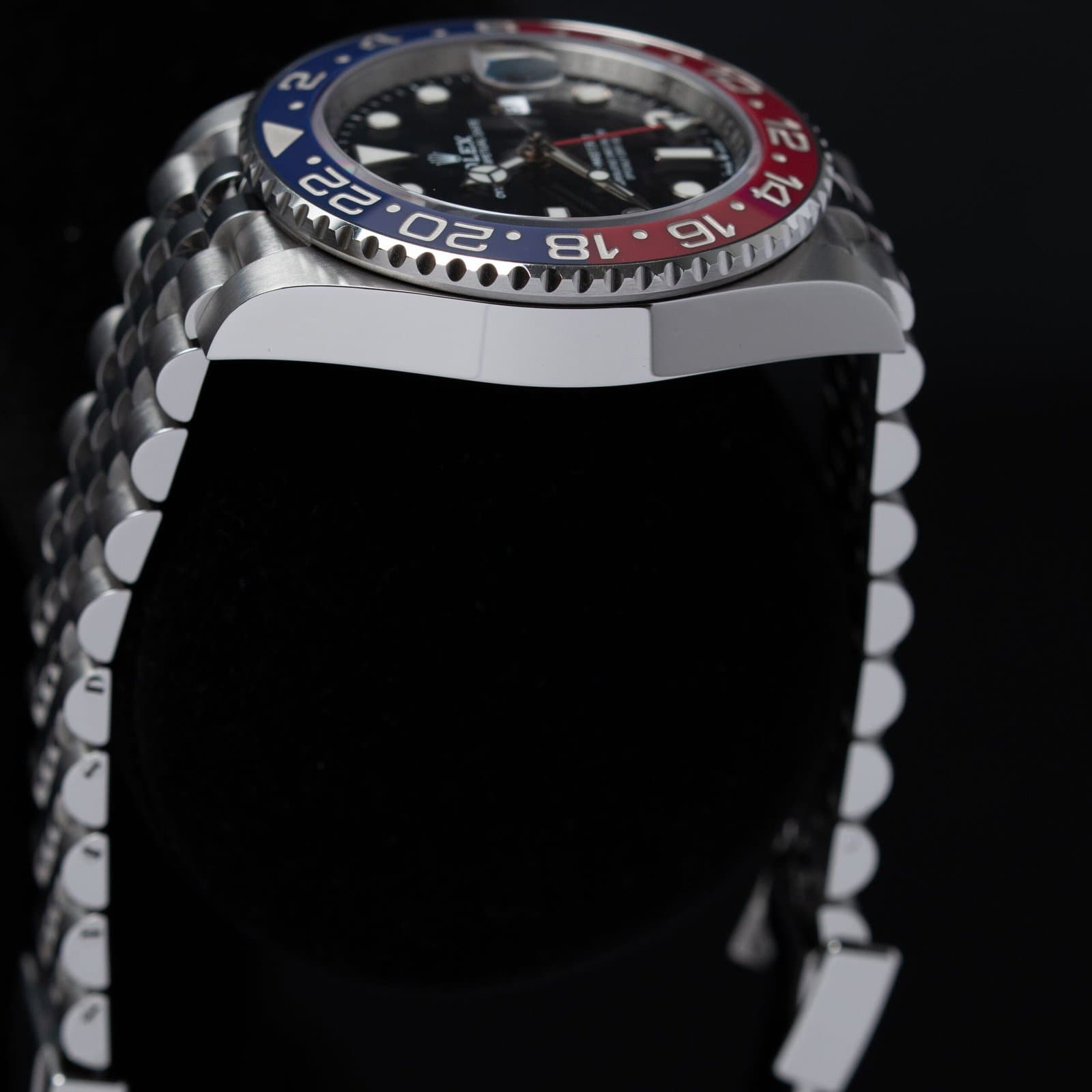
In practice, on November 1 you move only the hour hand, one step back. The minute hand stays where it is and the 24-hour hand keeps its own time. A traveler uses the same function after every flight across time zones. If you travel often, this is worth weighing when you choose your next watch. You can compare the GMT-Master II Pepsi listing to see how GTL lists the caliber, power reserve and included items.
Here is how the common types compare on the morning of November 1:
| Watch type | What you do | What to avoid |
|---|---|---|
| Time only, no date | Turn the hands back one hour, any time of day | Nothing special |
| Automatic with a date | Turn the hands back one hour in daylight hours | Setting at night, between 9 p.m. and 3 a.m. |
| GMT with an independent hour hand | Step the hour hand back one hour, minutes and 24-hour hand stay put | Setting at night |
| Stopped watch | Move the hands clear of 9 p.m. to 3 a.m., set the date, then the time | Quick-setting the date with the hands near midnight |
The Pepsi and Batman comparison covers the two best-known GMT-Master II bezels side by side if you’re choosing between them.
What should you check on a pre-owned watch’s crown and date?
The setting parts get used twice a year at minimum, so they deserve a look before you buy pre-owned. Ask whether the crown screws down smoothly, whether the hands set without slipping, and whether the date flips cleanly around midnight. Good Times Luxury carefully checks every watch before it is listed, and is always happy to send close-up photos or videos of a specific piece on request, including the crown and case side.
Keep the manual. The complete set on GTL’s Pepsi listing includes the original boxes, warranty card, hang tag and user manual, and that booklet is where your model’s crown positions are spelled out. The guide to what “full set” means on a pre-owned watch explains what else usually comes in the box.
November also starts salt season in the Chicago area. If you’re picking one watch for the cold months, the post on wearing a luxury watch in a Chicago winter covers bracelets, straps and cleaning.
Questions buyers ask
When do you change your watch for daylight saving time in 2026?
Daylight saving time ends at 2:00 a.m. on Sunday, November 1, 2026, according to NIST. Set a mechanical watch back one hour later that morning or afternoon, not at 2:00 a.m.
Will turning the hands back change the date?
Not if you do it in daylight hours. Seiko’s 4R34 instructions say that even when the time is set back across a day, the date will not be set back, so a one-hour correction at mid-morning leaves the date alone.
Why shouldn’t you set the date at night?
Between about 9 p.m. and 3 a.m. the date change is underway in the movement. Seiko’s instructions warn that setting the date then can keep it from changing the next day.
Does a GMT watch make daylight saving time easier?
Yes, if its hour hand sets independently, as on the Rolex GMT-Master II. You step the hour hand back one hour without moving the minute hand or the 24-hour hand.