Buying Guides
How Watch Condition Impacts Pre‑Owned Rolex Value
Polishing, bracelet stretch, dial and bezel condition and original parts can move a pre-owned Rolex’s price by thousands. What to check before you buy.
Contents 6
In the pre-owned Rolex market, condition is one of the biggest drivers of price, often ahead of age, rarity or even box and papers. Small differences in polishing, bracelet wear or dial condition can move the price by thousands.
Condition grades
Dealers usually sort pre-owned Rolex into tiers: unworn, excellent, very good, good and fair. The grade affects both how fast a watch sells and how high its price can go, most of all in steel sports references, where collectors look hardest. Lightly worn examples consistently sell for more than heavily polished ones.
Condition also changes how a watch loses value over time. We compare that against buying new in our new vs pre-owned Rolex guide.
The case and polishing
Collectors look at the case first. Over-polishing softens the lugs, rounds the edges and removes metal, and that change is permanent. Sharp chamfers and thick lugs show the case has seen little refinishing, and those watches sell for more.
Look for crisp transitions, defined lug lines and even brushing. An unpolished case matters most on modern sports models like the Submariner, GMT-Master II and Daytona. Even light polishing can put collectors off if the proportions have visibly changed.
Bracelet stretch and wear
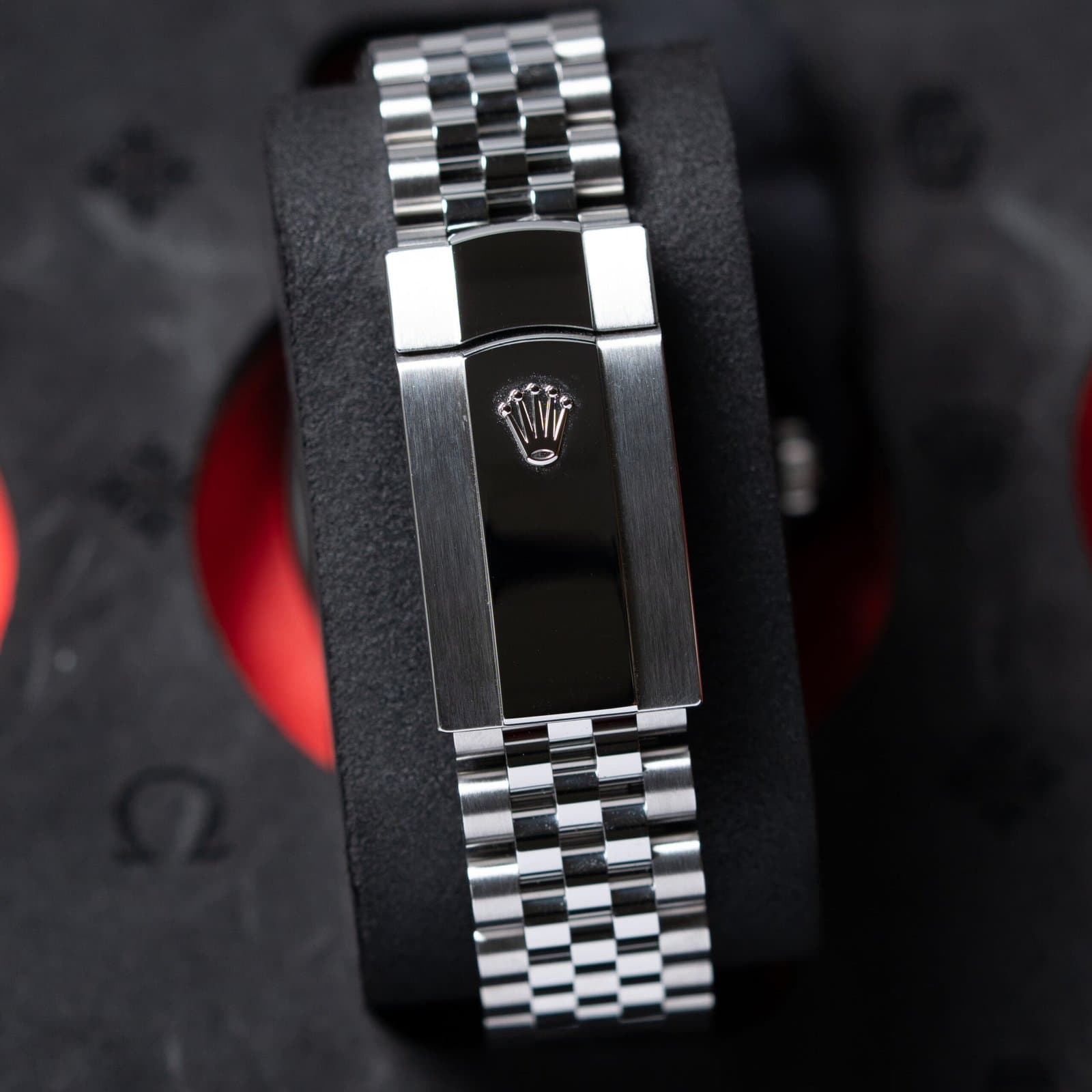
Buyers often study the watch head and forget the bracelet. Stretch comes from pins and sleeves wearing over time. It looks loose, feels less comfortable and can be expensive to correct.
Vintage bracelets often show some stretch after decades of wear, but heavy sag lowers the price. Modern solid-link bracelets hold their shape better, yet still show use through clasp wear, scratches and missing links.
Dial, bezel and insert
The dial often causes the biggest price swings. Scratches, moisture spots or an aftermarket refinish can hurt collector interest badly, especially on glossy or sunburst dials.
Buyers expect a modern ceramic bezel to look close to perfect. On a vintage aluminium insert, honest fading can add appeal if the rest of the watch is original. Matching hands, clean printing and the correct bezel all help confirm originality.
Service history and original parts
Service records add reassurance, but only when the original parts stay. A replacement dial, hands or bezel fitted during a service can lower collectibility even if the watch runs perfectly.
Collectors prefer sympathetic servicing: the mechanical work done, without unnecessary cosmetic replacements. If you’re comparing two similar watches, the one with the sharper case, a complete bracelet and original parts usually holds its value better.
Common questions
Does polishing always lower a Rolex’s value?
Not always. Light professional polishing can be acceptable. Heavy refinishing that changes the case shape usually lowers it.
Can bracelet stretch be fixed?
Partly, but a tight original bracelet is usually worth more than a rebuilt or heavily replaced one.
Do replacement parts hurt resale?
Often. Collectors generally prefer the original dial, bezel and hands, especially on sought-after references.